


WI 2026
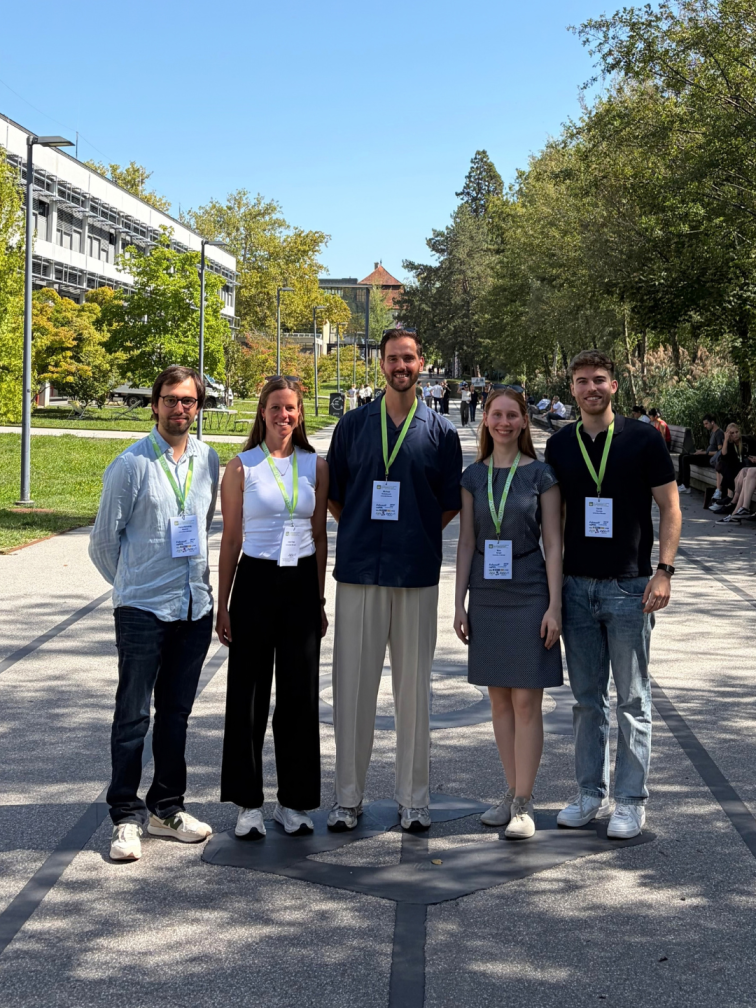
The 21st International Conference on Information Systems (WI 2026) took place from September 6 to 10, 2026, at Johannes Kepler University Linz in Austria. Under the theme “Sociotechnical Systems in the Age of AI,” the conference focused on how artificial intelligence is changing the use of technology and the role of humans in business contexts. The conference brought together researchers and practitioners and provided a platform for exchanging ideas on current developments in Information Systems. In addition to academic contributions, the event also emphasized networking within the community.
Staff and students from the Department of Information Systems at the University of Münster were also represented with numerous contributions. A total of six papers were presented, covering topics including digital transformation, digital solutions for the circular economy, and digital product passports:
- “Tool Adoption in Systematic Literature Reviews: An Empirical Investigation of the Review Process” (Näscher, Hans-Henning; Strohmann, Timo; vom Brocke, Jan)
- “Why Overcoming Does Not Work: A Configurational Reconceptualization of the Barrier Construct in Digital Transformation Research” (Poppe, Celine; Koddebusch, Michael; Brandt, Tobias)
- “Digital Solutions for Improving Circularity in Textile Recycling” (Reichert, Nicole; Sander, Marie; Stanlein, David)
- “Generation Z Consumer Preferences for Digital Product Passport Attributes” (Herold, Tim Lukas; Montsch, Celine; Stanlein, David)
- “ReuseMe: A DSR Study on Simplifying Local Donation and Reuse” (Khidirboev, Uroljon; Khudoyberdiev, Isroil; Koddebusch, Michael)
- “The Influence of Explainable AI on Bias in Decision-Making Processes” (Vahland, Carolin Elisabeth; Burger, Mara)
It is particularly noteworthy that three of the presented papers by Nicole Reichert, Marie Sander, Tim Lukas Herold, Celine Montsch, Uroljon Khidirboev, and Isroil Khudoyberdiev emerged from the master’s seminar “Digital Enablers of the Circular Economy” and were accepted as full papers in regular tracks.
In addition, Michael Koddebusch co-chaired the track “Smart Cities & Digital Government” together with Bettina Distel and Tobias Guggenberger (University of Bayreuth).