
Two Information Systems Graduates and a Strong Idea: How better bites Uses AI to Optimize Processes in Large-Scale Kitchens
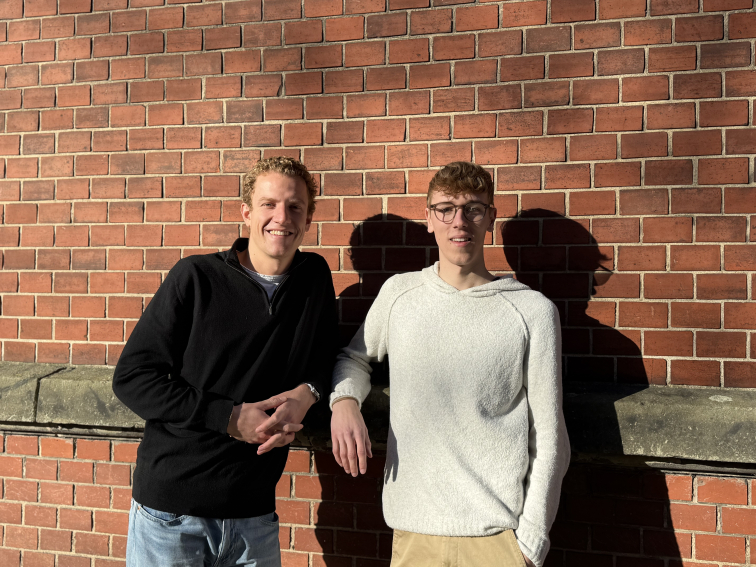
How can processes in large-scale kitchens be made more precise, sustainable, and efficient? This was the question tackled by Nico Nonnen and Mattis Sippel, two Information Systems graduates from the University of Münster, laying the foundation for their start-up, better bites. Their AI-driven software solution helps kitchen managers plan ingredient usage more accurately, reduce food waste, and optimize processes.
The idea originated where many students eat every day: in the cafeteria. While having lunch in the Da Vinci cafeteria on the Leonardo Campus, the two founders wondered how kitchen managers could calculate the right quantities every day without reliable guest numbers.
The first conceptual approaches had already emerged a few months earlier in their final bachelor’s module in Digital Business, led by Dr. Jan Stockhinger, in which students were asked to develop their own innovation. Since gastronomy played a significant role in their environment, they focused on the challenges of over- and underutilization in large-scale kitchens. In January 2025, they decided to pursue their idea after graduation in their own start-up.
Their first point of contact was the REACH Euregio Start-up Center, where they participated in the “Validation Lab” and systematically validated their idea. Conversations with potential customers quickly revealed that there is a great need for precise, data-driven planning, especially in cafeterias and large-scale kitchens.
A decisive step in the development of better bites was the close collaboration with the Studierendenwerk Münster, which they gained as a pilot customer. The founders had access to historical data, could observe processes on site and even take a look behind the scenes in the kitchen. This allowed them to analyze real processes and build and continuously adjust the software based on valid data.
The system behind better bites is a self-developed machine learning model that analyzes external factors such as weather, semester periods, lecture schedules, local events and previous sales figures to accurately predict how many guests will come and which dishes will be in high demand. Each cafeteria is modeled as an individual location with its own characteristics, while cross-location patterns within a city like Münster are also taken into account.
The results from several university cities demonstrate the software’s potential: it reduces food waste by 2,800 kilograms per location per year, increases planning accuracy by 11 percent, and lowers costs per location by more than €10,000 annually.
One of the biggest challenges was to develop the software in such way that it can be used not only by the Studierendenwerk Münster but in any cafeteria. At the same time, the user interface was designed to be as intuitive as possible and to show transparently how the forecasts are created. The founders emphasize that it is particularly important to them that: “we don’t want to replace the kitchen managers but support them in their daily planning,” emphasizes Nico Nonnen.
In addition to the Studierendenwerk Münster, the founders are now working with other student service organizations in North Rhine-Westphalia and Baden Württemberg. The next steps for Nico Nonnen and Mattis Sippel include expanding to additional locations and entering the corporate cafeteria. In the long term, the software is intended to support not only kitchen managers but also teams in menu planning, controlling and sustainability management. “We want to build long-term partnerships,” says Mattis Sippel. “We are deliberately not scaling without restraint but staying close to our customers in order to meet their needs optimally.”
The founders see their bachelor’s degree in Information Systems as an important foundation. The combination of business and IT content provided them with both theoretical fundamentals and practical knowledge, for example in the modules Data Management, Statistics or Digital Business. In addition, they gained valuable experience in working student jobs, internships, and through their engagement in student initiatives, allowing them to apply and deepen their knowledge. Experiences that particularly strengthened their soft skills, teamwork, and project competencies include the project seminar “INFOCAMP Board – A Hybrid Dashboard for Real-Time Visualization and Analysis of (Dis)Information Campaigns” with Prof. Christian Grimme, the Digital Business seminar with Dr. Jan Stockhinger, and a joint semester abroad in Lisbon.
“We are able to link a rather traditional sector like communal catering with the information technology sector, and that is exactly what we learned during our studies: that you have to think interdisciplinarily,” says Nico Nonnen.
Their advice to students is to make the most of their studies, actively seek practical experience, think interdisciplinarily, and seize opportunities such as semester abroad in order to grow both professionally and personally.
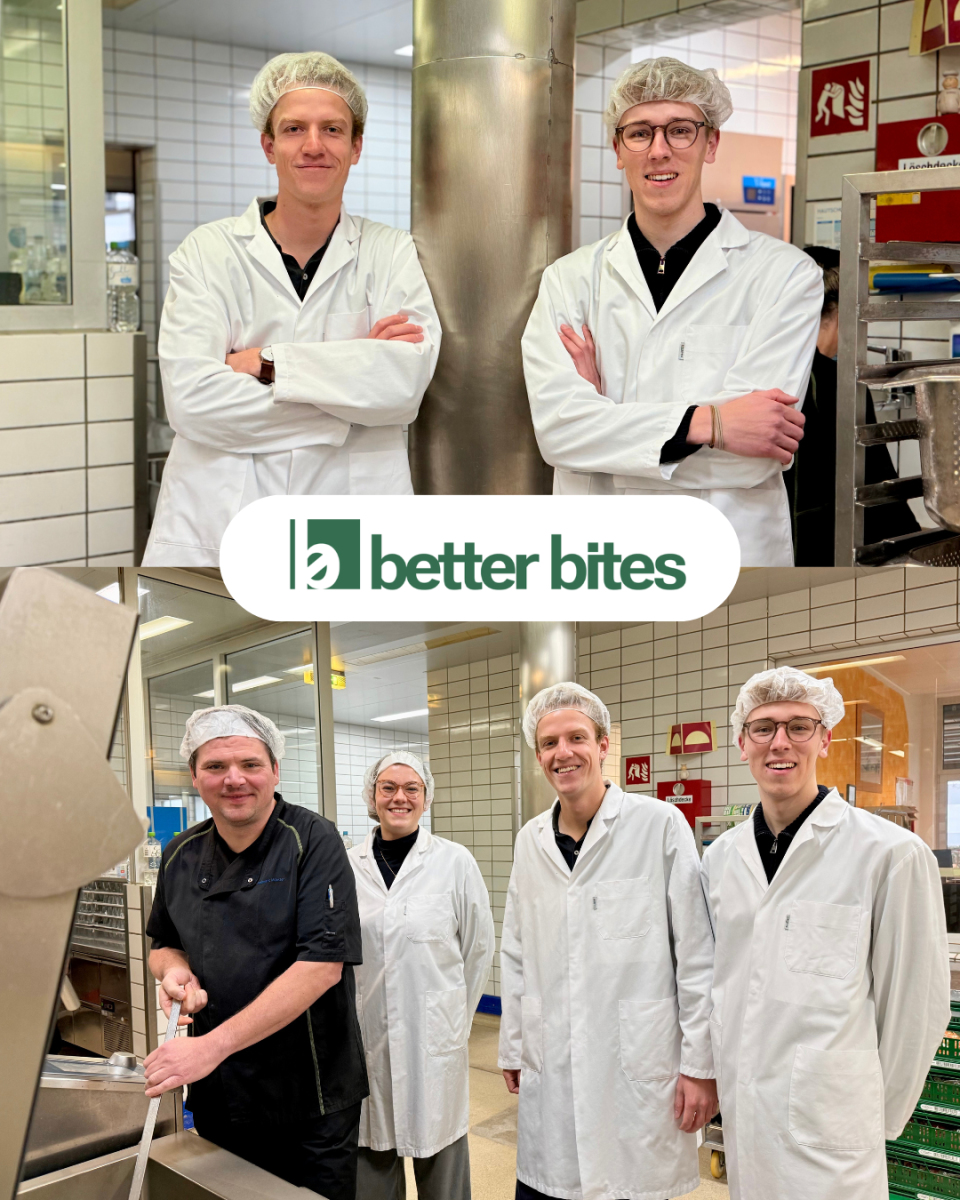
Nico Nonnen and Mattis Sippel behind the scenes in the cafeteria at Aasee (© Studierendenwerk Münster).